
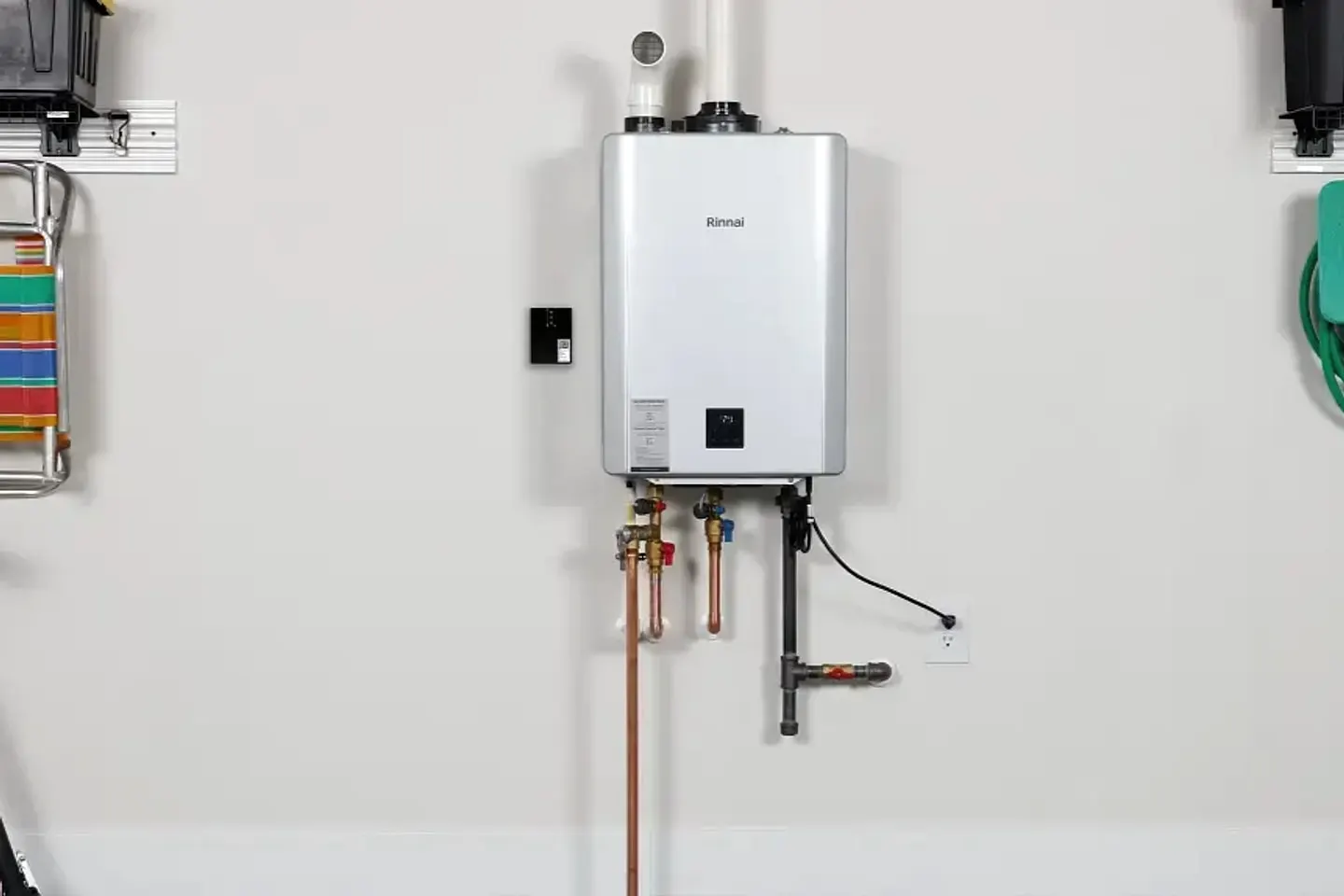
Tankless water heater in an Etobicoke home
Etobicoke · Residential · Water heater
Water heaters · tank, tankless and heat-pump
Don installs, repairs and maintains tank, tankless and heat-pump water heaters, and solar water heaters. That includes finding out why there is no hot water, replacing heating elements, thermostats and relief valves, flushing out sediment, and choosing a replacement that suits how your household uses hot water.
If you have no hot water or the tank is leaking, call. If you are thinking about switching to tankless or a heat-pump water heater, start with the buying questions below.
A heat-pump water heater only heats water. It is a different appliance from a heat pump that heats and cools your home; that is covered on the heat pumps page.
These help you describe what is happening when you call. Gas burners, electrical elements and the pressure-relief valve are for Don to work on.
On an electric tank, a failed heating element or thermostat is a common cause. On a gas tank, it can be the ignition or gas control. Hot water that runs out fast can mean sediment has built up in the tank, or that the heater is too small for the household.
When to call: For an electric water heater, check whether its breaker has tripped. Call if the breaker is on and there is still no hot water, or for any gas water heater that has stopped heating.
A leak may come from a fitting, the drain valve, the pressure-relief valve or its pipe, or the tank itself. A leak from the tank body usually means the tank is corroding and will need replacing.
When to call: Call as soon as you see water. Keep people and stored items away from the area. Do not try to open or adjust the pressure-relief valve.
These sounds are usually sediment at the bottom of the tank, which water boils through as it heats. It reduces how much hot water you get and wears the tank. Flushing can help if it is caught early.
When to call: Call to arrange a flush and inspection, especially if the noise is getting louder.
Discoloured hot water can mean the anode rod, which protects the tank from corrosion, is used up, or that parts of the tank or pipes are corroding. A rotten-egg smell only in the hot water is usually a reaction inside the tank rather than gas.
When to call: Call to have the anode rod and tank inspected. If you smell rotten eggs in the air near the heater rather than in the water, treat it as a possible gas leak (see below).
Before you call
Leave the building now and take everyone with you. From outside, call your gas utility’s emergency line or 911. Do not switch lights or appliances on or off on the way out. Call Don once the utility or fire service says it is safe to go back in.
Leave anything involving gas, wiring, refrigerant or the inside of the equipment to Don.
Replacement or new installation
Whether you replace like for like or change type, these questions are worth working through before you request an estimate.
Request an estimateA tank stores hot water and is simpler to replace like for like. A tankless unit heats water on demand, frees up floor space and does not run out, but it has different gas, venting or electrical requirements.
Heat-pump water heaters need space around them and pull heat from the room they are in, so a basement or utility room usually suits them best. Ask Don whether your location works.
The number of people, bathrooms and appliances running at once decides the size of tank or the capacity of tankless unit you need.
Staying with the same fuel is usually simplest. Switching affects gas lines, venting and electrical capacity, so raise it early.
Insulating the tank and pipes, adding a timer, or choosing a smart water heater can all reduce wasted heat. They are easy to add at installation.
The water heater work Don does for homes and businesses, from a single repair to a full replacement.
Etobicoke · Residential · Water heater
No. A heat-pump water heater heats only your water, using a small heat pump built into the tank. A heat pump for your home heats and cools the living space. Don works on both.
Usually sediment in the bottom of the tank. Flushing the tank can reduce it; Don can flush and inspect it at the same visit.
Water damage is the main risk, so call promptly and keep the area clear. If you also smell gas near a gas water heater, leave the building and call the gas utility’s emergency line or 911 from outside first.
It is a metal rod inside the tank that corrodes in place of the tank itself. When it is used up, the tank starts to corrode, so checking and replacing it is part of maintenance.
Don has over 20 years of experience with heating, cooling and hot water. Call to describe the problem, or send a request with the details. Not sure whether Don serves your area? Ask when you get in touch.